 AlbumRelease date:
13.05.2016
Tamar Halperin
Satie
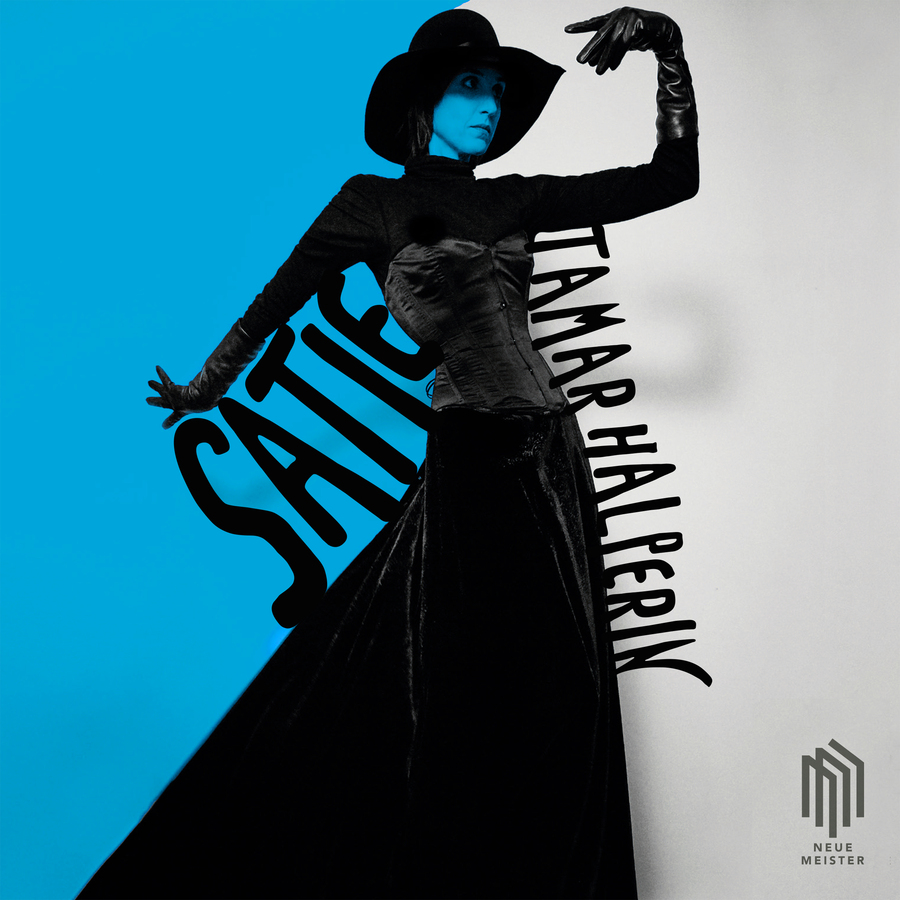
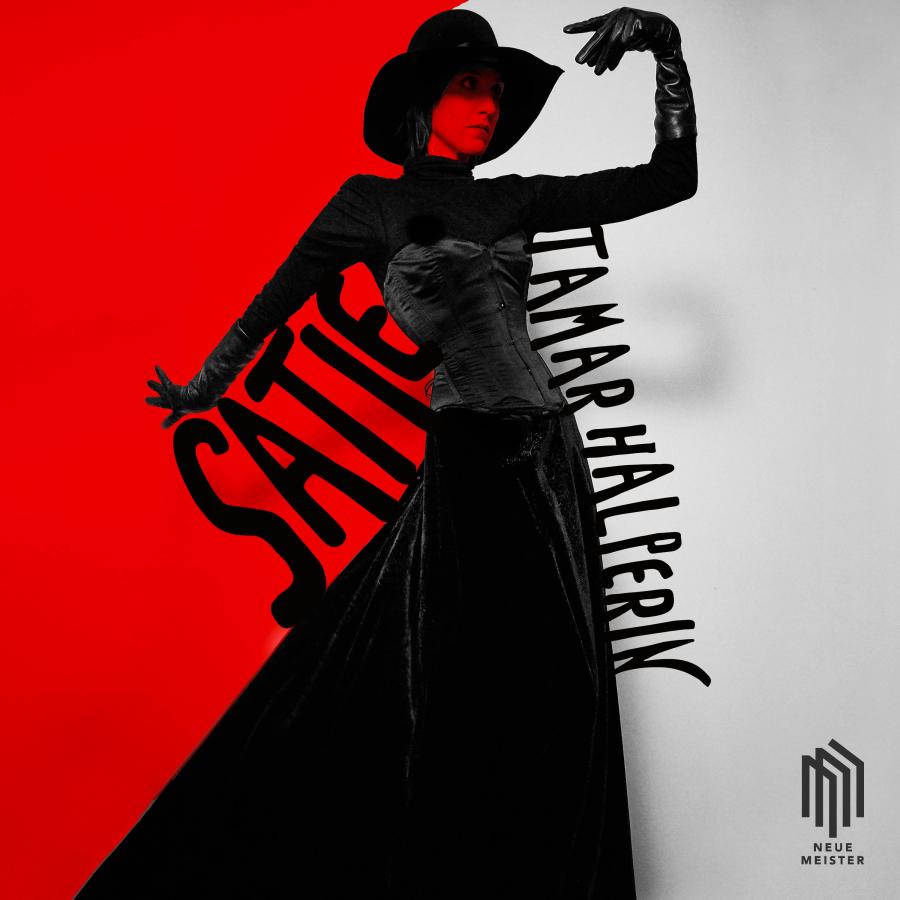
Stacked Instruments – Tamar Halperin and Guy Sternberg and the Satie sound of today. After Erik Satie’s death in 1925, friends entered his flat for the first time in years. They were amazed to find, amid countless umbrellas and piles of jumble, two grand pianos stacked one upon another. This is the image that has inspired pianist Tamar Halperin and producer Guy Sternberg to compile their album. They strip down Satie’s compositions into their individual voices, play them on various different instruments and stack the pieces on one another. Halperin and Sternberg take a grand piano, harpsichord, Hammond organ and Wurlitzer piano, and a computer too, and address the question of how Satie’s music would have sounded today. At the same time, their interpretations reflect Satie’s influence on the various generations of artists that followed him. After all, Satie is far more than the archetype of the minimal pianist. He was a composer who blurred the borders between “classical art music” and non-classical, popular styles, introducing various aesthetic concepts into his music such as minimalism, Dadaism, nonsense and surrealism and in the process, leaving his footprints in a wide range of artistic genres. Halperin has her own name for “Gnossienne #2”, for instance, she calls it “Freddie Free”, because the legendary Miles Davis song “Freddie Freeloader” from his album “Kind of Blue” begins with the same sequence of harmonies. “Gnossienne #1” becomes “The Café Scene”, because Louis Malle’s film “Feu Follet” turned the piece into a standard for film soundtracks. “Manière de Commencement” is called “Man Ray”, because the American artist called one of the lithographs of his series of the same name “Erik Satie’s Pear”. The album cover is inspired by painter and illustrator Henri de Toulouse-Lautrec. Tamar Halperin was photographed by cameraman Gregor Hohenberg in a costume from Satie’s time. Graphic designer Dirk Rudolph then introduced the photo into an image that plays with elements of Toulouse-Lautrec’s aesthetics.
Videos
Artist
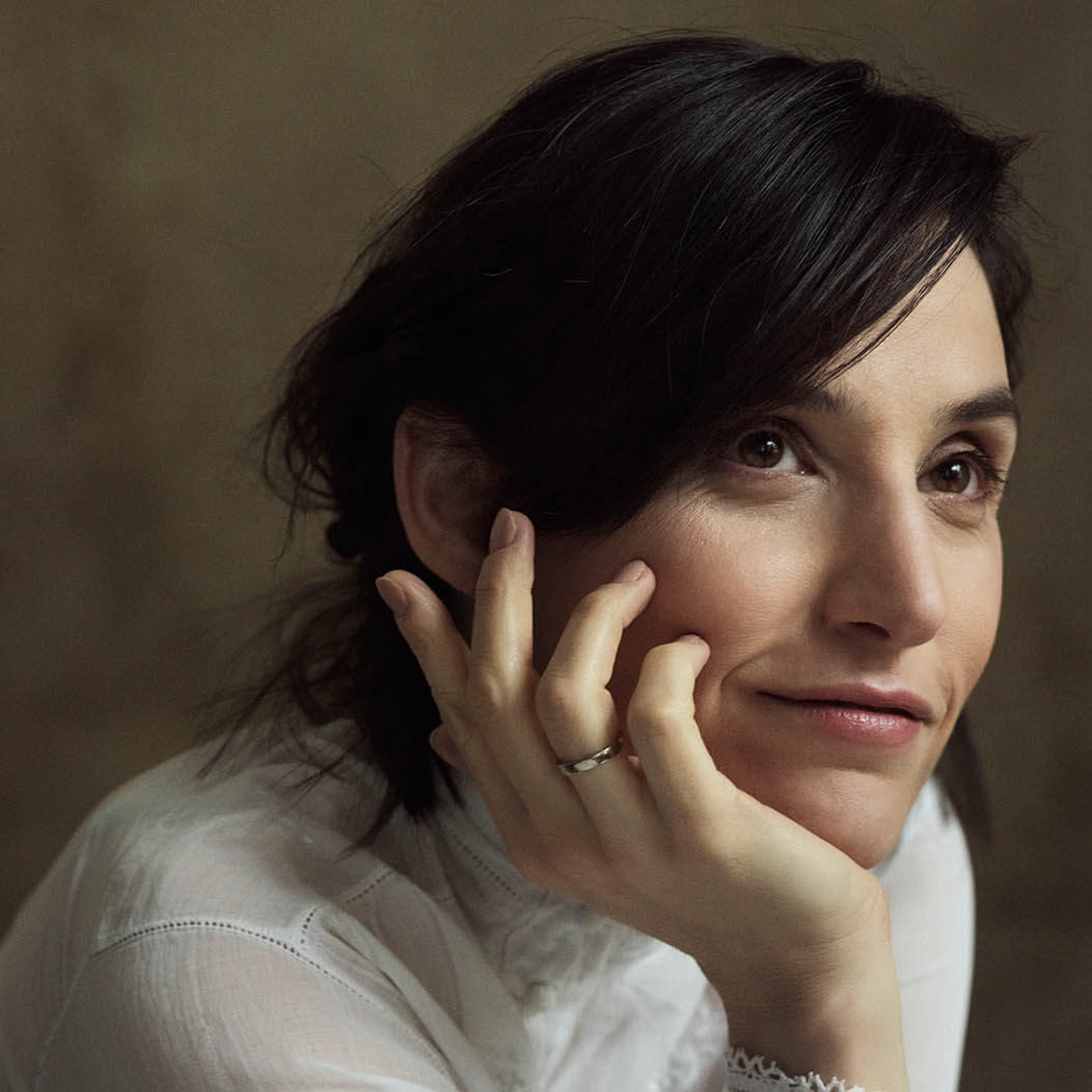
Tamar Halperin
Born in Tel Aviv, Halperin grew up in Israel and first pursued a career as a tennis player. She studied music at the Tel Aviv University and continued her studies at the Schola Cantorum Basiliensis with a focus on historically informed performance. She obtained her PhD at the Juilliard School in New York City on Johann Sebastian Bach.
She specialises in Baroque music, but also pursues projects of contemporary music. She recorded with the jazz pianist Michael Wollny the album Wunderkammer which was awarded the Echo Jazz in the category piano album in 2010. She recorded a sequel, Wunderkammer XXL, with Wollny and the hr-Bigband which was awarded the Echo Jazz in the category big band. She played harpsichord and celesta with Wollny at the Jazzfest Bonn 2014.
In 2011, she played works by Bach on the harpsichord at the Baroque Christophoruskirche in Wiesbaden-Schierstein, as part of the Rheingau Musik Festival. In 2012, Halperin recorded Lieder by Haydn, Mozart, Schubert and Brahms with her husband, the countertenor Andreas Scholl, titled Wanderer. The reviewer of a similar program at Wigmore Hall noted in The Guardian that she "proved to be a wonderfully subtle accompanist and a performer of real distinction", offering piano works by Mozart and Brahms in addition to the songs. In 2016 she published an album with music by Erik Satie on the occasion of the 150th anniversary of his birth, played on different keyboard instruments including, besides piano and harpsichord, hammond organ and Wurlitzer piano.
The Hessian Cultural Prize 2016 was awarded to both Halperin and Scholl by Volker Bouffier, the Minister-president of Hesse. Michael Herrmann spoke at the event about both artists as crossing borders.
Photo: Salar Baygan
More releases